A tear-off is the part of a reroof that shows what the old roof was doing. Once the covering is off, the deck is open to inspection, and the scope can change with what we see.
How a tear-off runs
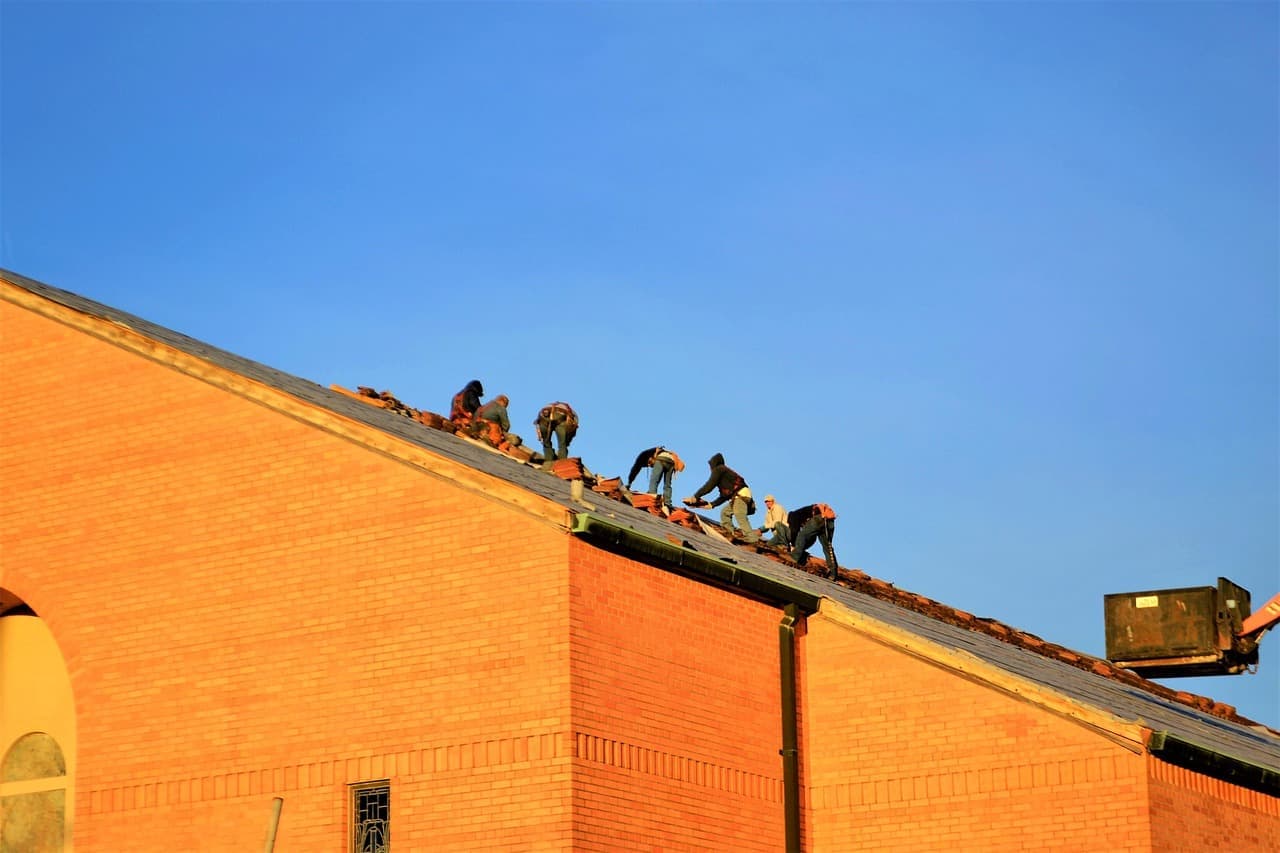
The roof is stripped section by section. Covering, old underlayment and loose fasteners come off, and the debris goes into bins or chutes, not onto the lawn. As each section opens, it is checked and dried in, so the house is not left open to weather.
We photograph what we find on the deck and write up any change to the scope before the new roof starts. You see the same things we see, in the same order.
What the deck tells us
Sheathing that is soft, stained or split is replaced. Gaps in spaced boards matter for a second reason: the cool roof exceptions treat a radiant barrier differently when the sheathing under it is spaced, so how the deck is built can change which route you take (California Energy Commission, 2022).
Flashing is judged on the same pass. Metal at walls, chimneys and valleys is renewed with the new roof, not reused.
What a reroof with tear-off includes
- Old covering and underlayment stripped to the deck
- Debris kept in bins or chutes, with plants and patios covered
- Deck photographed and inspected after tear-off
- Soft or split sheathing replaced
- New underlayment, flashing and covering
- Permit, inspection and the Re-roofing Certificate of Compliance
Signs a reroof should include a tear-off
- A deck that feels soft or springy when walked
- Sagging along a ridge or valley
- Daylight or damp visible in the attic
- A covering that can no longer be lifted without breaking
Protecting the house and yard
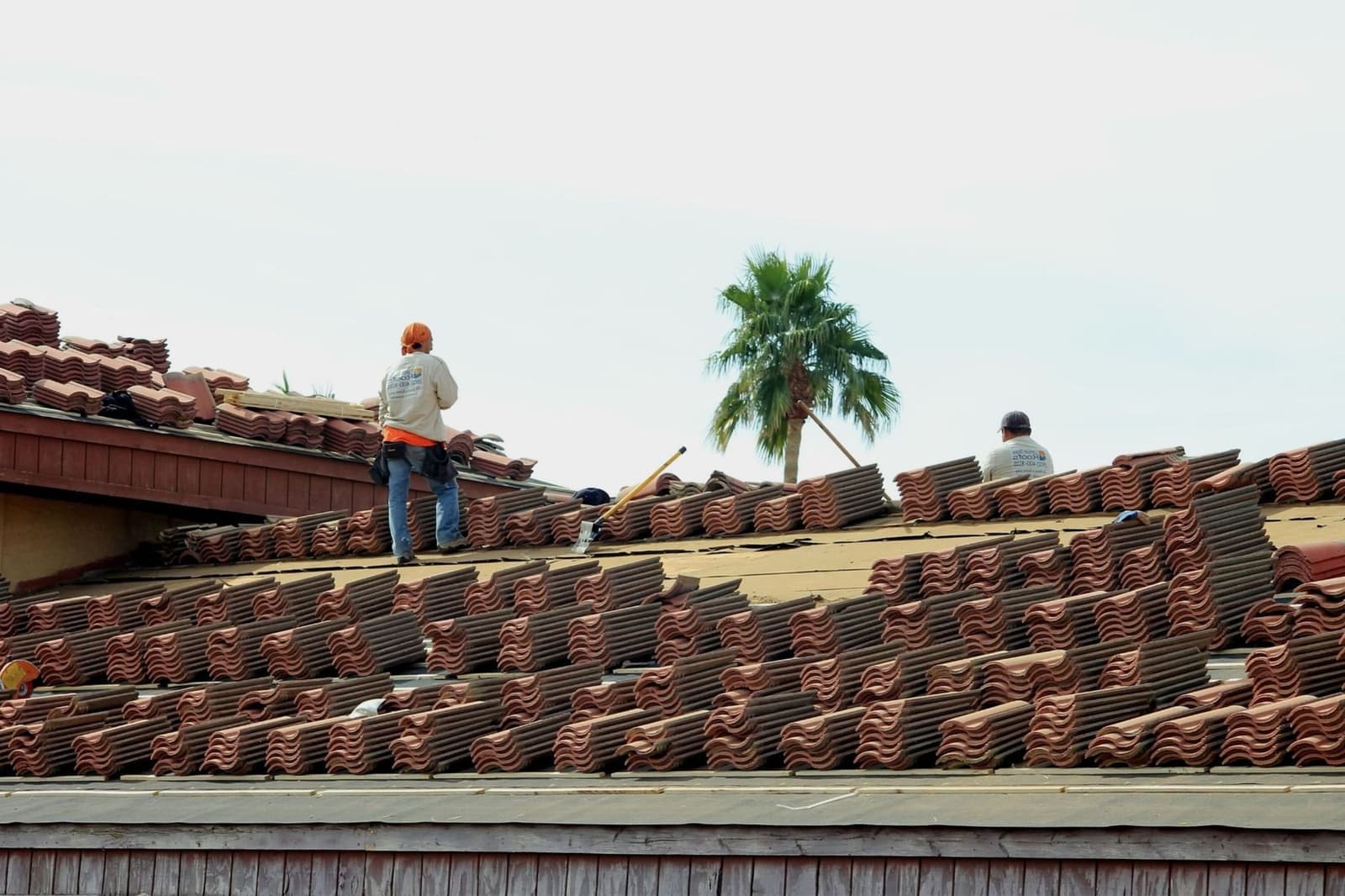
Before the tear-off starts, we protect plants, patios and anything under the eaves, and we decide where bins and ladders go. Doors and windows near the work can be masked.
At the end of each work session the roof is dried in and the ground is checked for stray nails. Ask us about the plan for your yard, your pets and your neighbors' driveways when we visit.
Permits and paperwork that close a tear-off
The City of Los Angeles issues re-roof permits with a Class A or B covering on solid sheathing at under 6 lb per square foot on an express basis, which means no plan check (LADBS, 2026). IN.Form.12, the Re-roofing Certificate of Compliance, is the closing paperwork. The contractor or an owner-builder signs it. It then goes to the inspector, or to LADBS by mail.
Two County rules govern what comes off. Clay or concrete tile has to be removed completely, whatever goes on next, and existing wood shakes have to go as well (Los Angeles County Public Works, 2025). Inside the City of Los Angeles, shake is barred as a covering, and a modification request can allow limited work on up to 5 percent (LADBS, 2026).
Before the tear-off starts
Why must tile come off entirely before a reroof?
That is the County rule. Reroofing with any material first requires removing all of the clay or concrete tile (Los Angeles County Public Works, 2025). There is a practical reason as well. Only a bare deck shows the sheathing, and tile left in place hides it.
What can a tear-off uncover under an older roof?
Soft or stained sheathing, rusted flashing, nail pops and extra layers beneath the top covering are possible finds. None of them can be judged from the ground. The scope changes only with what we show you on the deck.
How is the property kept clean and safe while the roof comes off?
Plants and patios are covered, bins or chutes carry the debris, and openings near the work are masked. Each session ends with the roof dried in and the ground checked for stray nails. Tell us about pets, gardens and parking before the work starts.
What is the Re-roofing Certificate of Compliance?
A short LADBS form, IN.Form.12, that states the new roof meets the code that applies. A contractor or an owner-builder fills it in and signs, then gives it to the inspector or sends it to LADBS (LADBS form, 2016).
What happens if rain arrives partway through?
Any open section is dried in before we leave it. Downtown Los Angeles normally gets about 87 percent of its rain from November to March (National Weather Service, 1991-2020 normals), so a tear-off in those months comes with forecast checks and a covered fallback.