A cool roof is a roof built to send back more sunlight than a standard one. Two numbers describe it: aged solar reflectance and thermal emittance. California sets minimums for them when a reroof passes a threshold, and the minimums depend on slope and climate zone.

Reading the two numbers
Reflectance measures how much sunlight bounces off the surface. Emittance measures how freely the surface lets go of the heat it keeps. Both are read after weathering, since a clean new surface flatters the product. SRI is a single index built from the two. It is not reflectance under another name.
The CRRC runs the directory where manufacturers list these figures for each product. A label on the carton is not proof of compliance on its own. The listing is where the aged values are printed, and that is the page we check.
The state rule, zone by zone
For a single-family alteration, the Energy Code looks at how much of the roof is replaced. Past 50 percent the rule switches on. A new layer laid over the old one counts as replacement, while repairs and replacements of 50 percent or less stay outside it (California Energy Commission, 2022).
Steep roofs: zone 4 and zones 8 through 15 are covered. The target is 0.20 aged reflectance with 0.75 emittance, and SRI 16 is the one-number alternative. Low-slope roofs: zones 4 and 6 through 15 are covered. Required is 0.63 reflectance and 0.75 emittance, or SRI 75 instead. A trade-off table for insulation offers a different route. Coastal zone 6 is the odd one out, because its steep roofs sit outside the rule and its low-slope roofs sit inside. The 2025 code, in effect from 1 January 2026, repeats this text (California Energy Commission).
What a cool roof job covers
- The rule for your address, written into the scope
- Covering options checked against the CRRC listing
- Aged reflectance and emittance noted for the chosen product
- Deck and underlayment renewed with the covering
- Flashing and edge metal chosen to suit the new roof
- The permit path and the closing paperwork
When a cool roof question comes up
- A reroof that will replace more than half the roof
- A roof that is being added to or overlaid
- A choice between a dark and a light color in tile or shingle
- A change of covering, such as shingle to tile or metal
What the City of Los Angeles adds
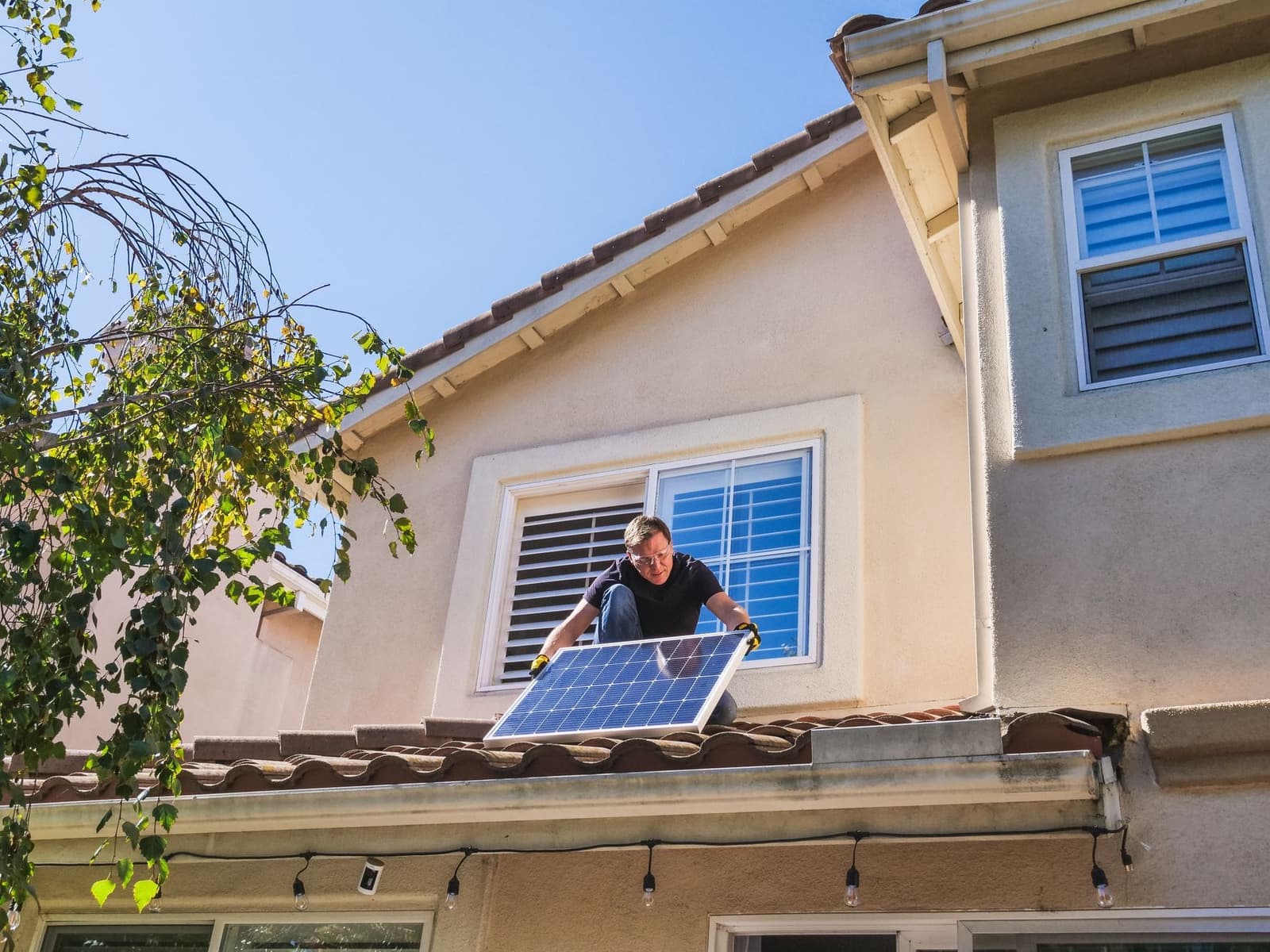
Since 1 January 2015 the City's green building code has asked residential reroofs that replace more than half the roof for cool roof values. On a steep slope, over 2:12, the LADWP sheet (2022) wants SRI 20, or a reflectance of 0.25 together with 0.85 emittance. For a low slope the same LADWP sheet wants SRI 78, or 0.65 and 0.85. The rule does not reach repairs, work on 50 percent of the roof or less, or roofs where solar goes in.
The permit bulletin adds a test of its own. LADBS asks residential replacements that pass 50 percent of the roof area for a product with a CRRC label (LADBS, 2026). In the City of Los Angeles one year is the window: put new roofing on more than 50 percent of the roof inside it and the whole roof must meet current code.
Other ways to meet the steep-slope rule
The Energy Code gives a steep roof several ways out, and we check them before choosing a covering. Insulation in the ceiling at R-38 passes, as does a U-factor of 0.025 or lower. A radiant barrier passes too, provided the sheathing under it is not spaced. An attic with no ducts in it passes for homes in zones 2, 4, 9, 10, 12 or 14. So does continuous insulation of R-2 or more, set above the deck or below it. Panels cover their own footprint, and a covering of 25 lb/sq ft or heavier counts too.
Where one of these applies, the scope says so, and you can see whether a cool rated covering is required or optional on your house. Color is chosen after the code, not before it.
Questions on cool roofs and the code
Which reroofs must be cool under the state rules?
Those that replace over 50 percent of a single-family roof, with an added layer counting as replacement. Work of 50 percent or less is outside the rule. Zone 4 and zones 8 through 15 carry the steep-slope table, while a low slope is covered across zones 4 and 6 through 15 (California Energy Commission, 2022).
Does the City of LA set cool roof values for every climate zone?
The City's values come by slope, not by zone. On a steep slope the LADWP sheet lists 0.25 reflectance with 0.85 emittance, or SRI 20, and on a low slope 0.65 with 0.85, or SRI 78 (LADWP, 2022). They apply once a residential reroof passes half the roof, and work of 50 percent or less is outside them.
Which cool options are there for tile, shingle and flat roofs?
Tile comes in lighter tones and special finishes, shingles in cool granule blends, and flat roofs in white or reflective membranes and coatings. The CRRC product directory lists the aged values for each, so match the listing to your slope.
Is a cool covering worth choosing in inland heat, like zones 9 and 14?
Zones 9 and 14 both fall inside the state steep-slope rule. The Energy Commission ZIP table lists Palmdale and Lancaster in zone 14, and Hollywood, Pasadena and Santa Clarita in zone 9. A cool rated covering sends back more sunlight than a standard one.
How do I check a product's CRRC listing?
Search the product name in the CRRC product directory and open its entry. Read the aged solar reflectance and thermal emittance, then compare them with the values for your slope.